
Oxford Instruments enables ROHM’s in-house GaN manufacturing with…
Oxford Instruments, a leading provider of advanced plasma processing solutions…
 Part of the Oxford Instruments Group

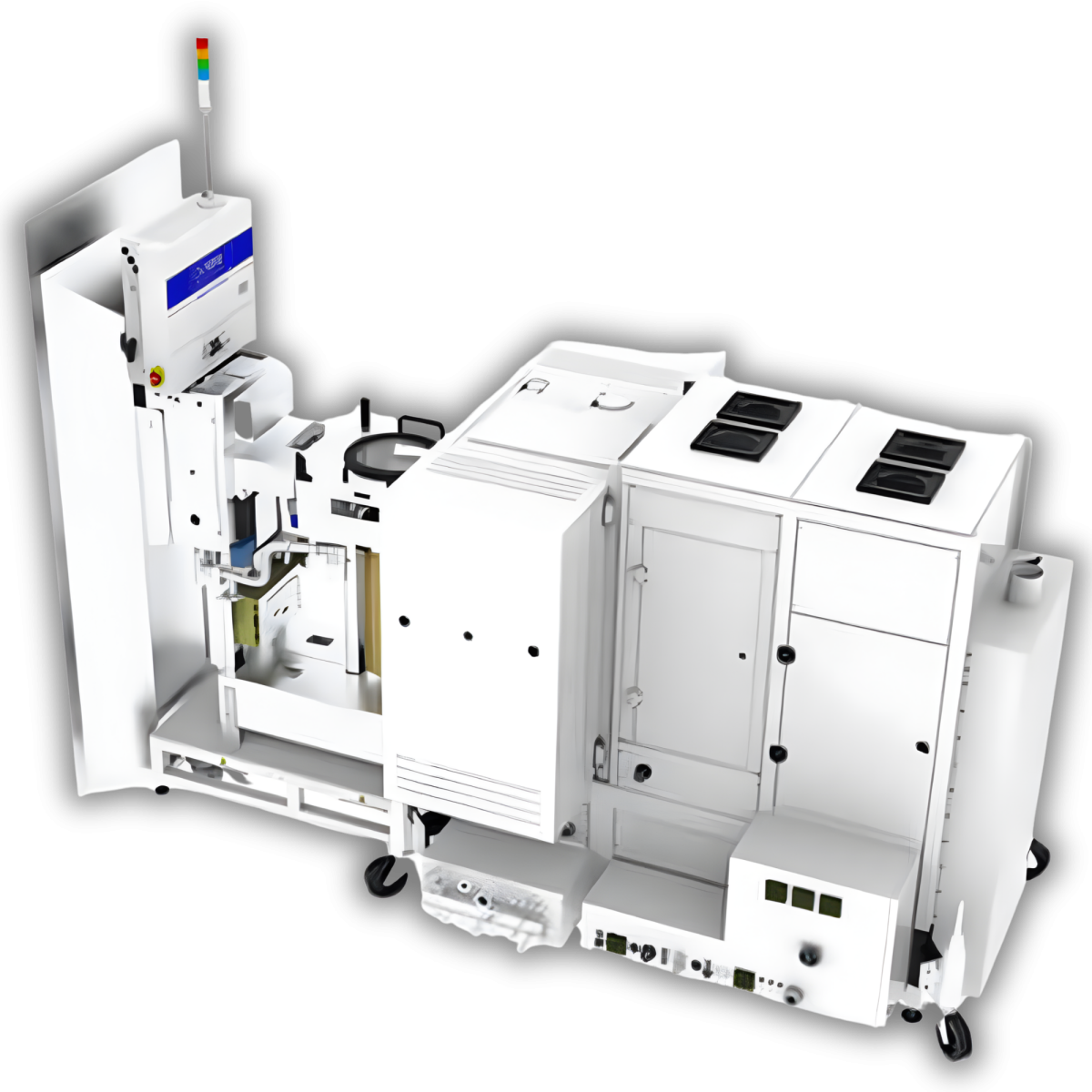
IBE can be applied in two ways:
In RIBE and CAIBE modes, reactive species are added (CHF3, SF6, N2, O2, etc.) to the source (RIBE) or to the gas ring (CAIBE) to increase volatility of etch products and selectivity to the mask material.
IBE (or milling with inert gases) is achieved by directing a beam of charged particles (ions) at a substrate with a suitably patterned mask in a high vacuum chamber. It enables highly directional beams of ions - whose space-charge is neutralised by electrons from the neutraliser - to control the etched sidewall profile as well as radial uniformity optimisation and feature shaping during nanopatterning, using the tilt angle to the beam with on-axis rotation for axisymmetry.
On the other hand, angled features can be created by the unique ability to tilt the sample (without rotation) altering the direction of impact of the ion beam. In both cases, the etch process can be assisted by chemistry (RIBE and CAIBE) using reactive gases to enhance both etch rates and selectivity to a mask.
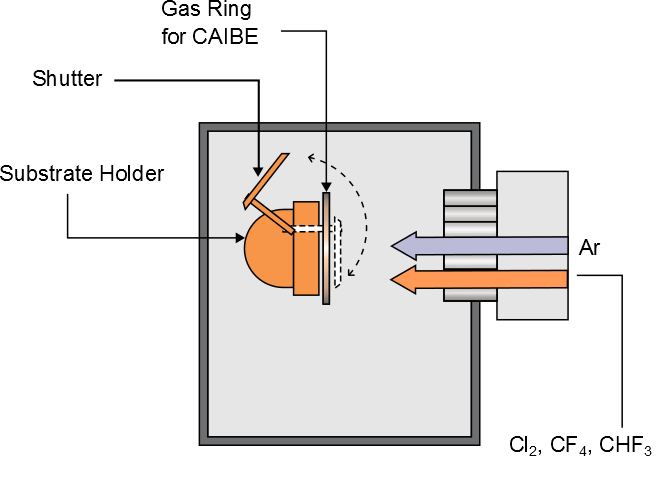
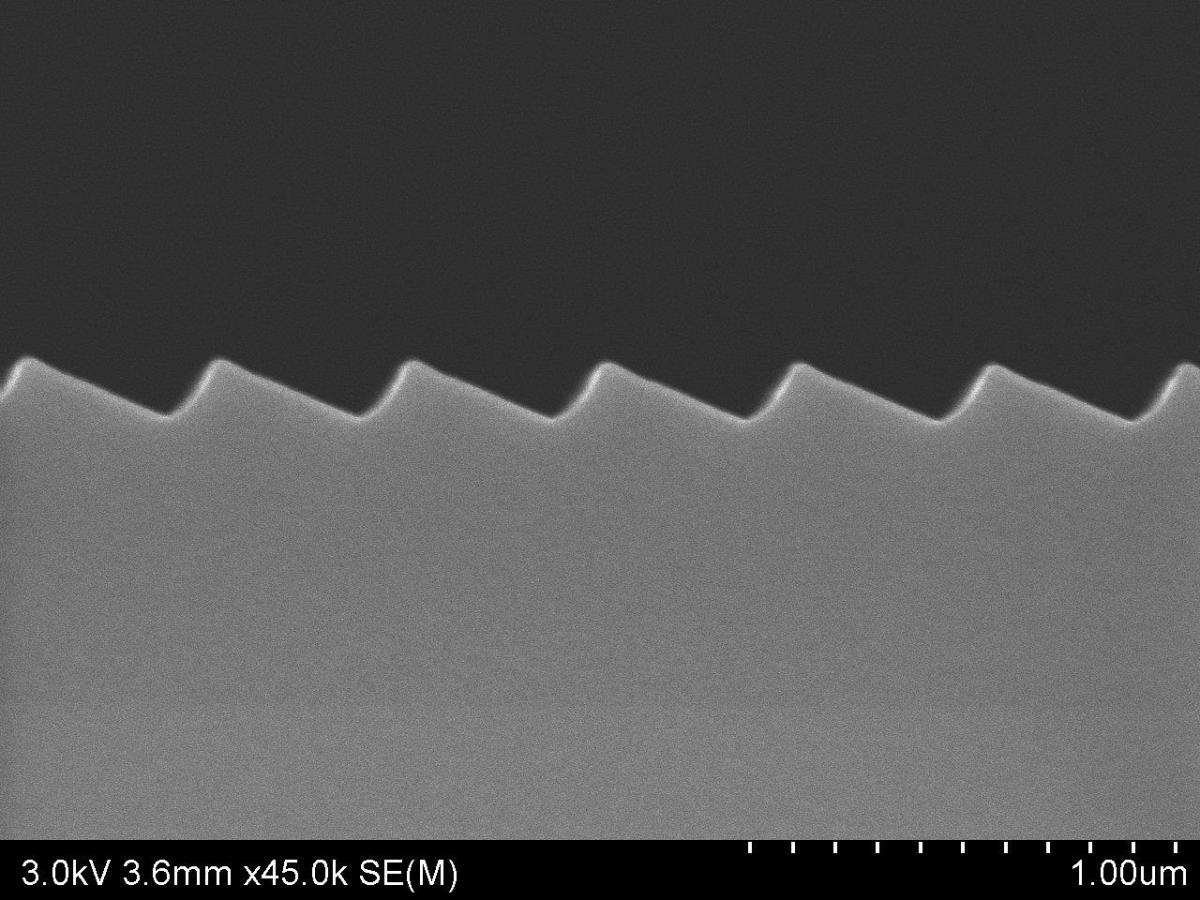
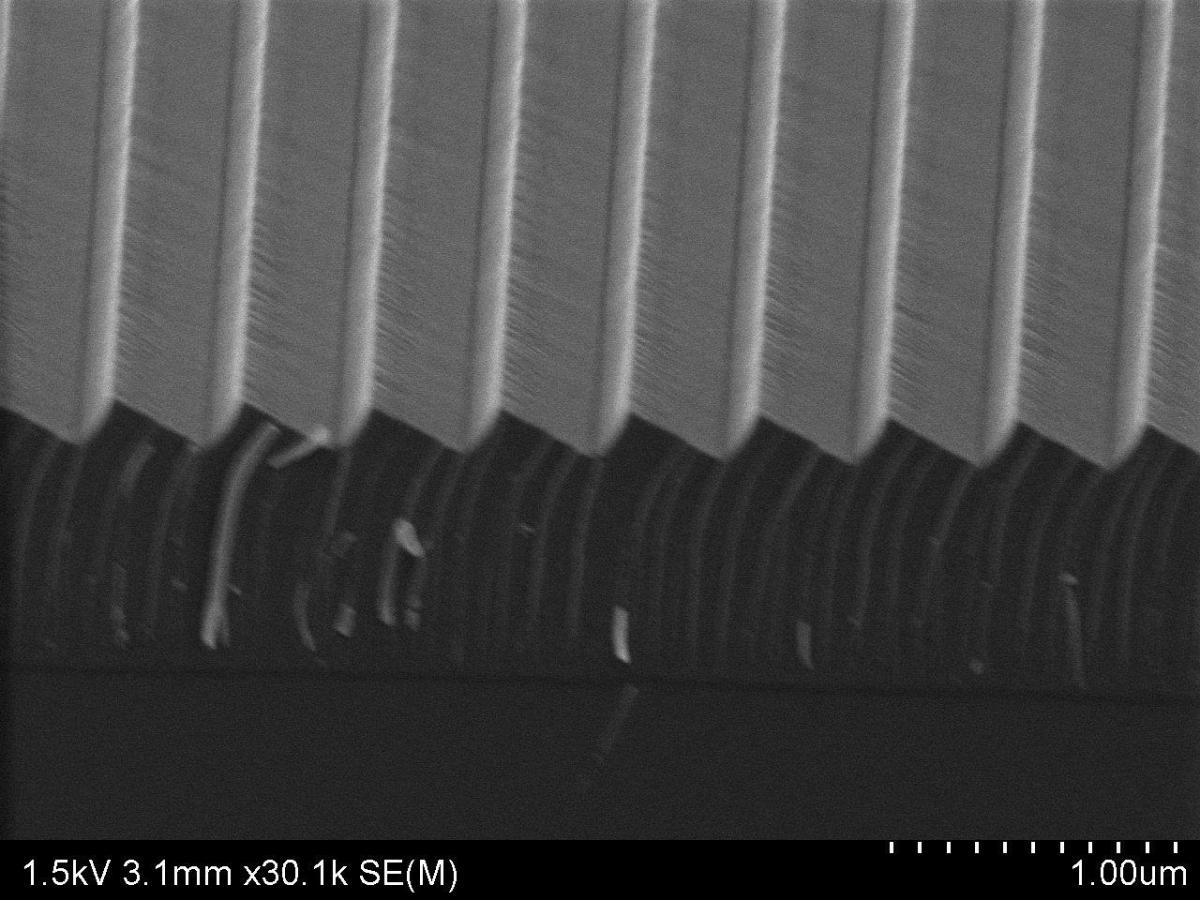
Ion beam technology provides an exceptionally versatile approach to etch and deposition by offering a single tool and maximising system utilisation. Ion beam etch offers maximum flexibility coupled with excellent uniformity.
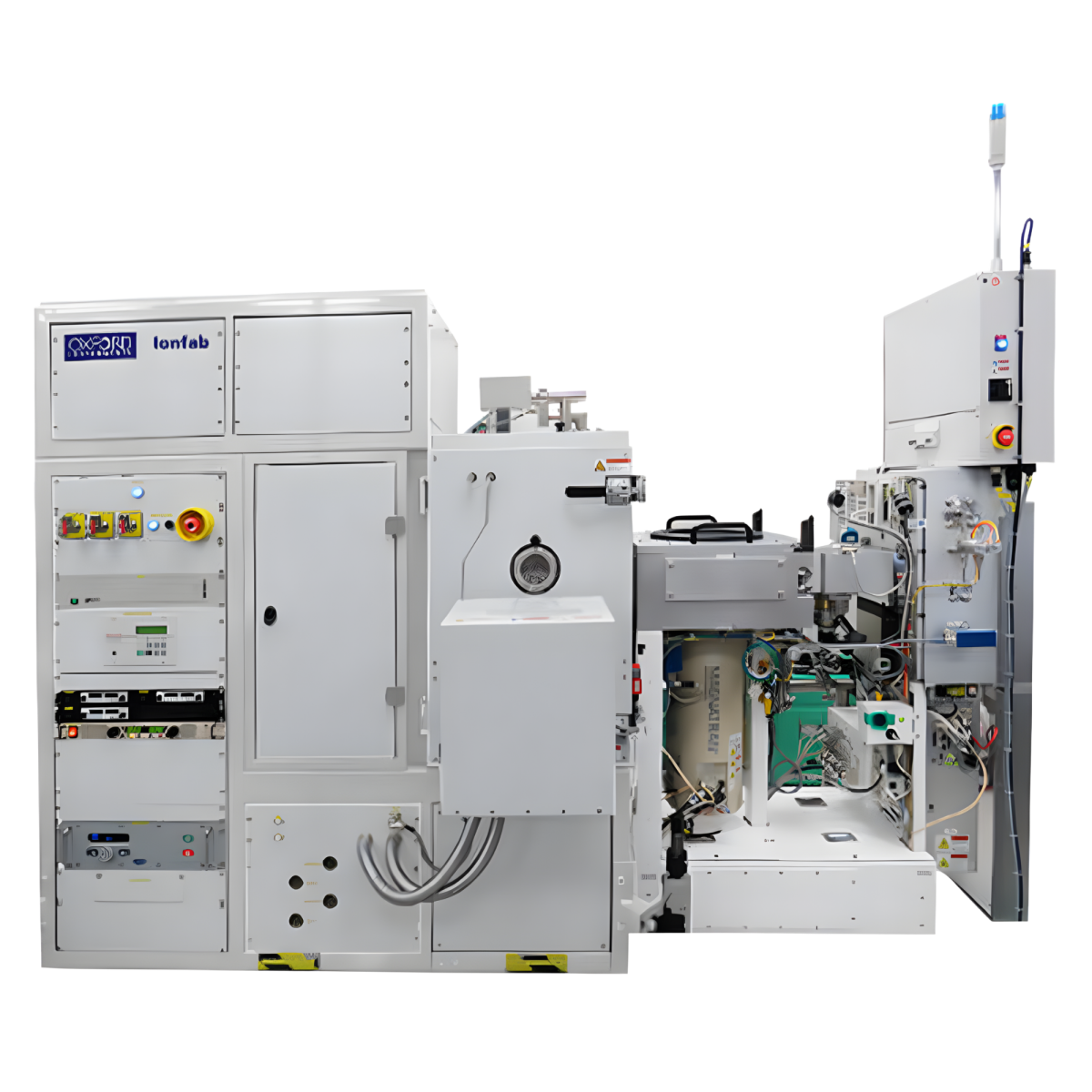
Our Ionfab systems have flexible hardware options including open load, single substrate load lock and cassette-to-cassette systems. Platform specifications are closely tuned to applications, enabling faster and repeatable process results.
Multiple mode functionality, etch and deposition in a single chamber
Single wafer load lock or cluster wafer handling
Capable of clustering with other Oxford Instruments plasma etch and deposition tools
Unmatched batch uniformity and process reproducibility
Wafer size |
100 mm |
200 mm |
Etch RF ion source |
15 cm |
30 cm |
Substrate rotation speed |
Up to 20 RPM | |
Substrate tilt angle |
-90° horizontal to +65° facing down | |
Platen temperature |
10 °C to 300 °C chiller or heater configuration | |
A compact ion beam etch and deposition system designed for flexible research and pilot production, equipped with up to two (15 cm) ion sources for etch or deposition. This makes it ideal for deposition on up to 200 mm wafers and etch process optimised for up to 100 mm wafers.
Having essentially the same footprint but with a larger process chamber, it is designed to process wafers up to 200 mm for both etch and deposition. Equipped with a 30 cm etch ion source, the system provides excellent etch uniformity and superior process stability, making it a great choice for pilot and full scale production.
Oxford Instruments is committed to providing a comprehensive, flexible and reliable global customer support. We offer excellent quality service throughout the life of your system.
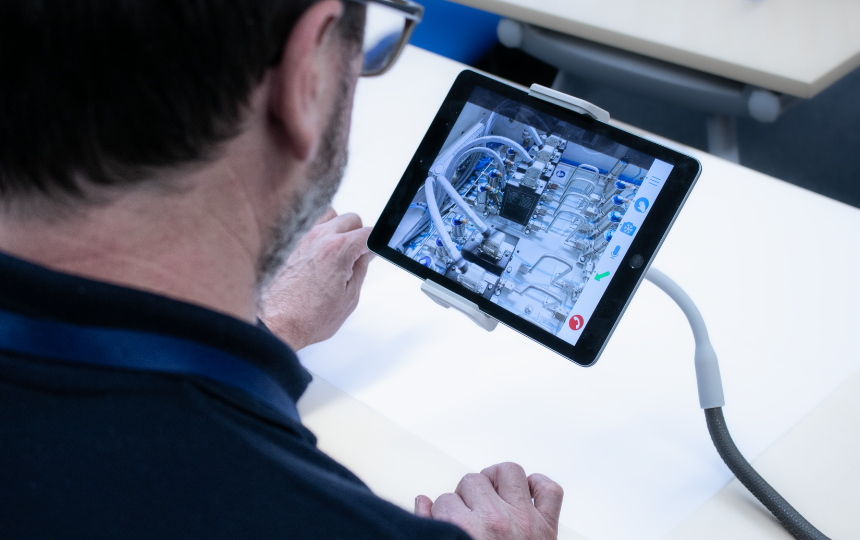
PTIQ is the latest intelligent software solution for PlasmaPro and Ionfab processing equipment.
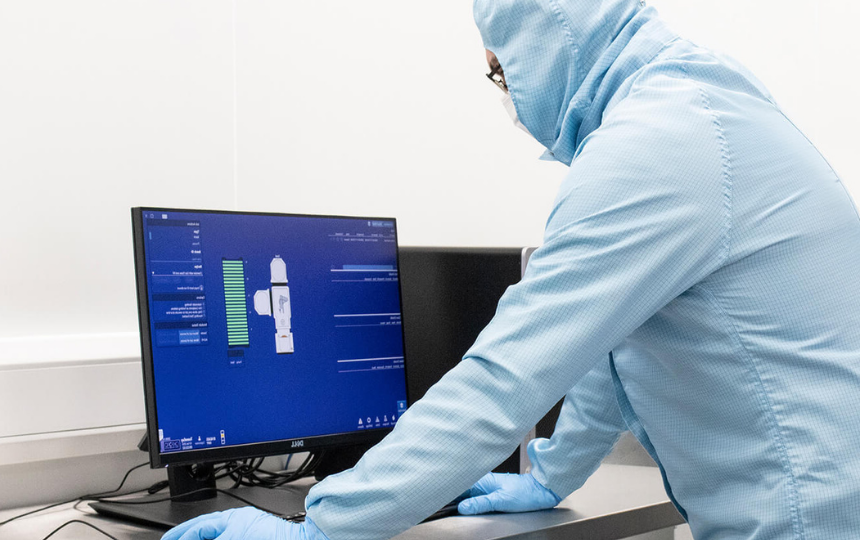
At Oxford Instruments Plasma Technology, we offer a wide range of technical training courses designed to suit all skill levels and needs.

© Oxford Instruments 2026