Part of the Oxford Instruments Group
Expand

Ion beam deposition (IBD)

A versatile and flexible thin film deposition technique that offers reliable, high quality and high performance coatings

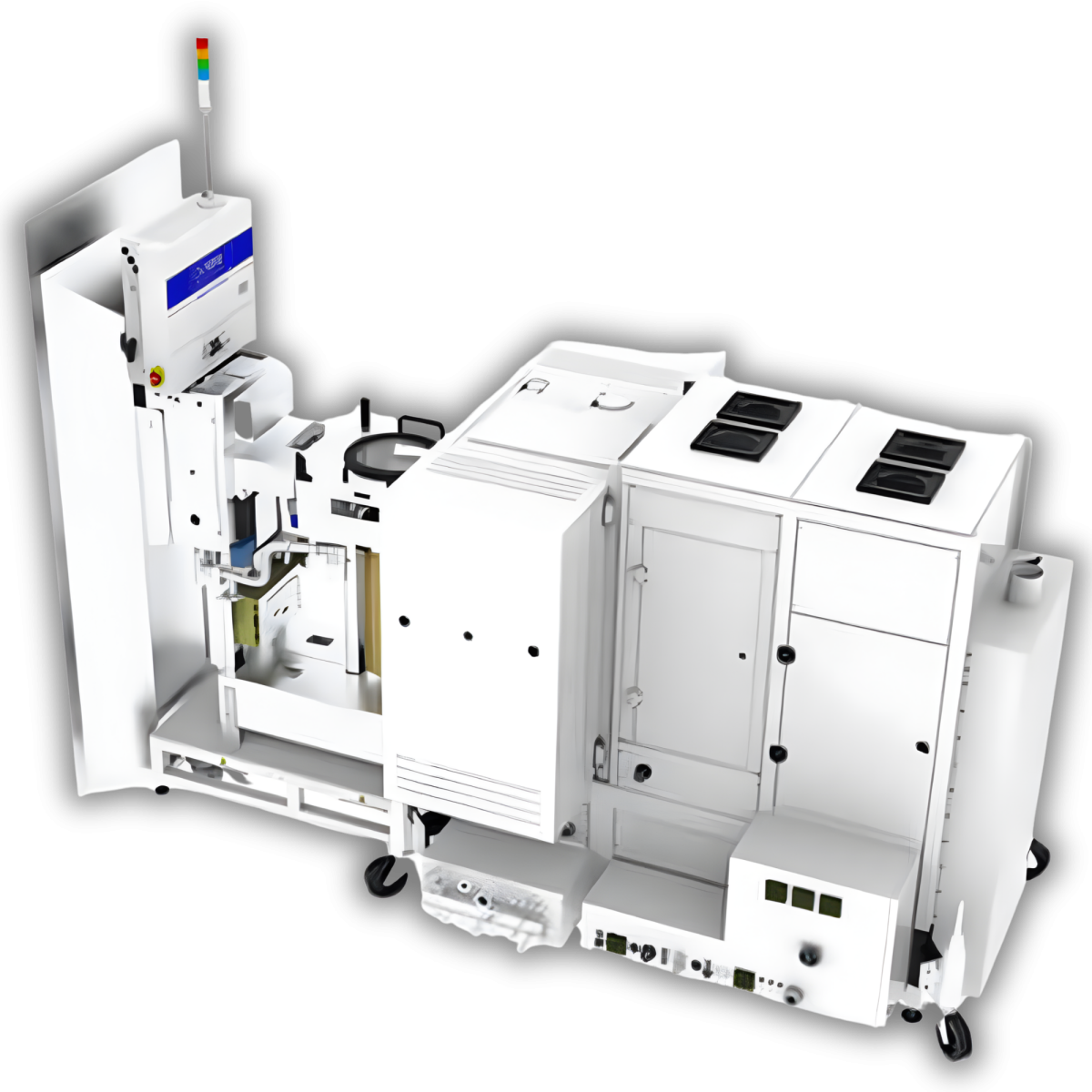
Ionfab ion beam

Offers maximum flexibility coupled with excellent uniformity for fast process development and repeatable process results

Ion beam deposition (IBD)

  • Precise deposited thickness and fine control of film properties
  • Un-matched batch uniformity and process repeatability
  • Low operating pressure for higher mean free path and less gas scattering reduces porosity and included gas in deposited films
  • Film are denser with higher film purity and better control of stoichiometry
  • Substrate temperature can be controlled between 15°C and 300°C during deposition
  • Pre-clean capability for improved film adhesion
  • Ultra-smooth coating with low scattering, added film surface roughness ~Angstrom scale
  • Etch/pre-clean sources allows illumination of substrate during deposition for assist beam/plasma control of film properties (e.g. reactive deposition)
  • Relative angling of target/substrate and optional oscillation of these allows precise tuning of deposition profiles and properties that’s etch not dep

How does IBD work?

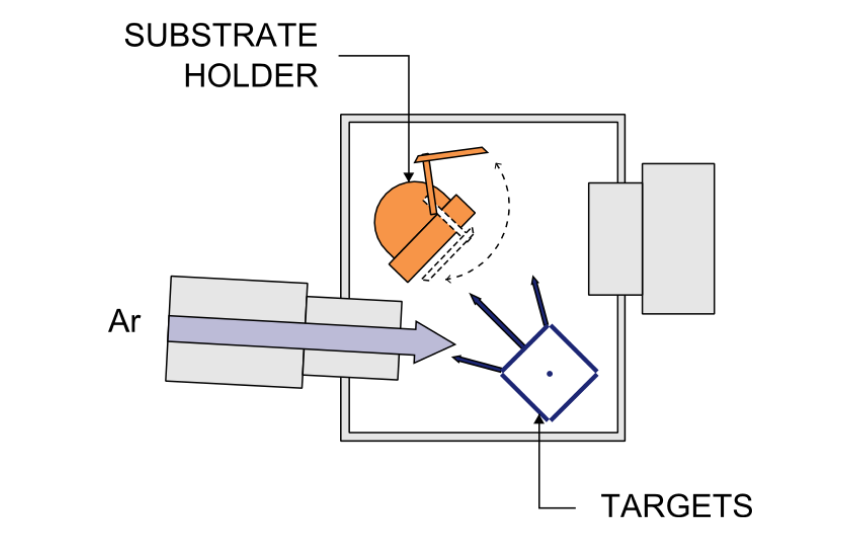
A beam of energetic ions bombards and sputters material from a target, thereby forming a plume of material that gets deposited onto the surface of the sample. Ion beam deposited thin films layer properties, such as refractive index, absorption, scattering, adhesion and packing density, can be finely tuned by varying beam parameters such as beam flux and energy, platen orientation relative to incoming materials and gas flow.

Ion Beam Deposition (IBD) is one of three ways of depositing thin-film using Ion Beam Sputtering: IBD, RIBD and IBAD.

IBD overview


Ion Beam Deposition is a versatile and flexible thin film deposition technique that offers reliable, high quality and high performance coatings, finding applications notably in infrared devices and high power lasers, for both R&D and the Production market.

IBD features


  • Deposition ion source: 15cm, 13.56 MHz driven
  • Gas inlet through source
  • Multiple targets, up to four, with shutter
  • Three grid set, molybdenum, to maximize deposition rate and film purity
  • Rotating and tiltable substrate holder with high-speed rotation (up to 500rpm) as an option (standard 20rpm)
  • In-situ monitoring of specific gas partial pressure and closed-loop feedback control capability for enhanced repeatability and fine control of thin film properties (e.g. VOx)
  • Patented high speed substrate holder (up to 500RPM) equipped with a White Light Optical Monitor (WLOM) designed for very accurate in-situ optical film control, notably for high-power laser devices

IBD applications


  • Laser facet coating (including high and anti-reflection)
  • Ring laser gyroscope mirrors
  • X-ray optics
  • II-VI-based infrared (IR) sensors
  • IR sensors (Vanadium oxide, II-VI)
  • Telecom filters
  • Metal track deposition: Au, Cr, Ti, Pt, ZnS etc
  • Magnetic materials: Fe, Co, Ni etc

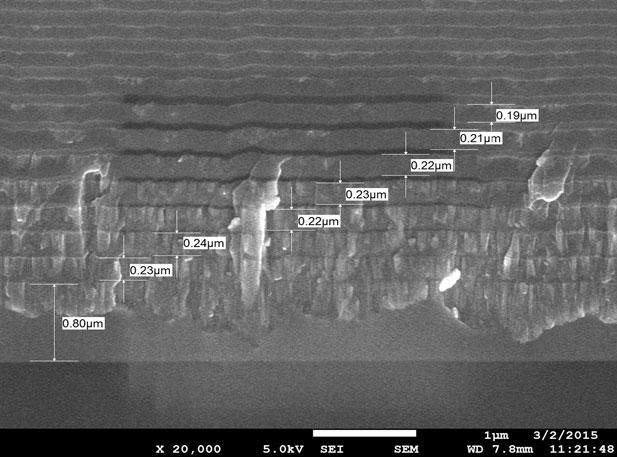
32-layer GRIN lens with IBD

7 layers of a GRIN structure with IBD

Featured IBD products

Ionfab ion beam

Our ion beam etch (IBE) & deposition (IBD) system is a popular choice for high-quality material processing. Our systems have flexible hardware options including open load, single substrate load lock, and cassette to cassette. System specifications are closely tuned to applications, enabling faster and repeatable process results.
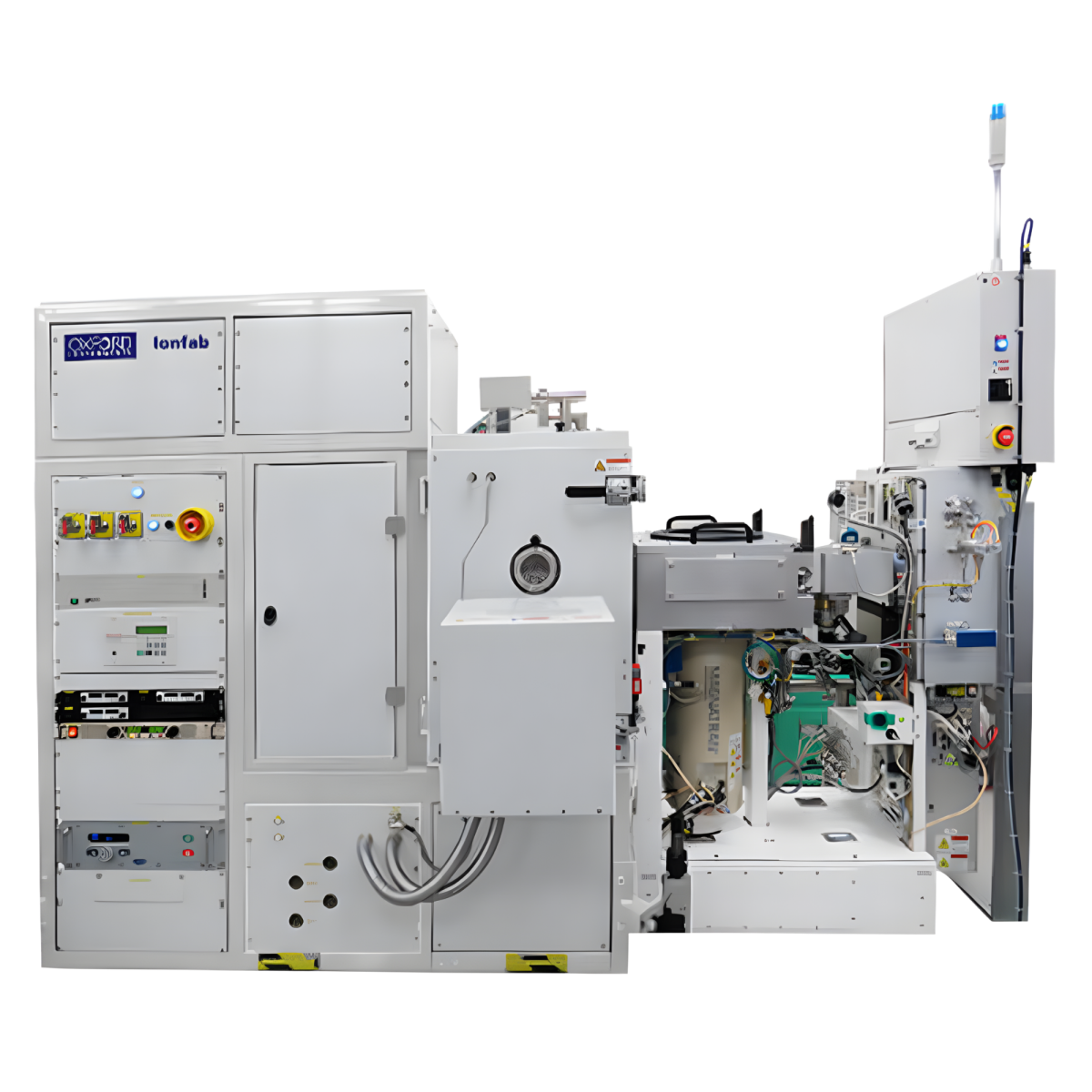
  • Multiple mode functionality, etch and deposition in a single chamber

  • Single wafer load lock or cluster wafer handling

  • Capable of clustering with other OIPT plasma etch and deposition tools

  • Unmatched batch uniformity and process reproducibility

Overview of Ionfab ion beam


Ion beam technology provides an exceptionally versatile approach to etch and deposition by offering a single tool and maximising system utilisation. Ion beam etch offers maximum flexibility coupled with excellent uniformity.

Our systems have flexible hardware options including open load, single substrate load lock and cassette to cassette. System specifications are closely tuned to applications, enabling faster and repeatable process results.

Key benefits

  • Platen tilt enables sidewall profile control
  • Reactive gas capabilities to enhance selectivity to mask
  • Industry standard in situ end point detection - SIMS, OES
  • Flexible configuration for advanced research applications
  • Unmatched uniformity and process reproducibility for production
  • Flexible wafer handling capacity - single wafer load lock or cassette-to-cassette robotic handler

Applications

  • Slanted etching
  • Laser facet etching
  • Magnetoresistive random access memory (MRAM)
  • Dielectric films
  • III-V photonics etching
  • Spintronics
  • Metal contact and track
  • Superconductors

Ion beam etching modes

  • Ion Beam Etching (IBE) / Ion Beam Milling
  • Reactive Ion Beam Etching (RIBE)
  • Chemically Assisted Ion Beam Etching (CAIBE)

Hardware features of ionfab ion beam


Wafer size

100 mm

200 mm

Etch RF ion source

15 cm

30 cm

Substrate rotation speed

Up to 20 RPM

Substrate tilt angle

-90° horizontal to +65° facing down

Platen temperature

10 °C to 300 °C chiller or heater configuration

Options for ionfab ion beam


Ionfab standard chamber

A compact ion beam etch and deposition system designed for flexible research and pilot production, equipped with up to two (15cm) ion sources for etch or deposition. This makes it ideal for deposition on up to 200 mm wafer size and etch process optimised for up to 100 mm wafer size.

Ionfab large chamber

Having essentially the same footprint but with a larger process chamber, it is designed to process wafers up to 200 mm for both etch and deposition. Equipped with a 30 cm etch ion source, the system provides excellent etch uniformity and superior process stability, making it a great choice for pilot and full scale production.

Global customer support

Oxford Instruments is committed to providing a comprehensive, flexible and reliable global customer support. We offer excellent quality service throughout the life of your system.
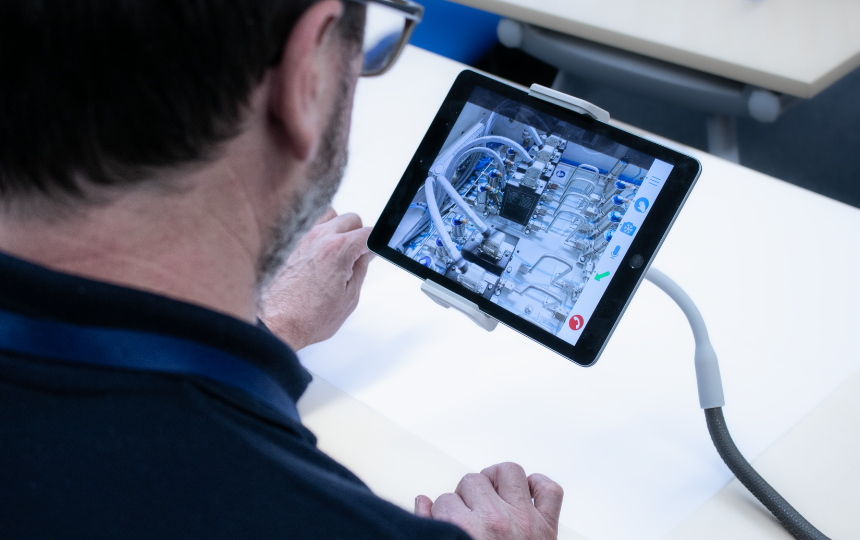
  • Remote diagnostics software provides quick and easy fault diagnosis and resolution.
  • Support contracts are available to suit the budget and situation.
  • Global spares in strategic locations for quick response.
Find out more

NEW: PTIQ software

PTIQ is the latest intelligent software solution for PlasmaPro and Ionfab processing equipment.
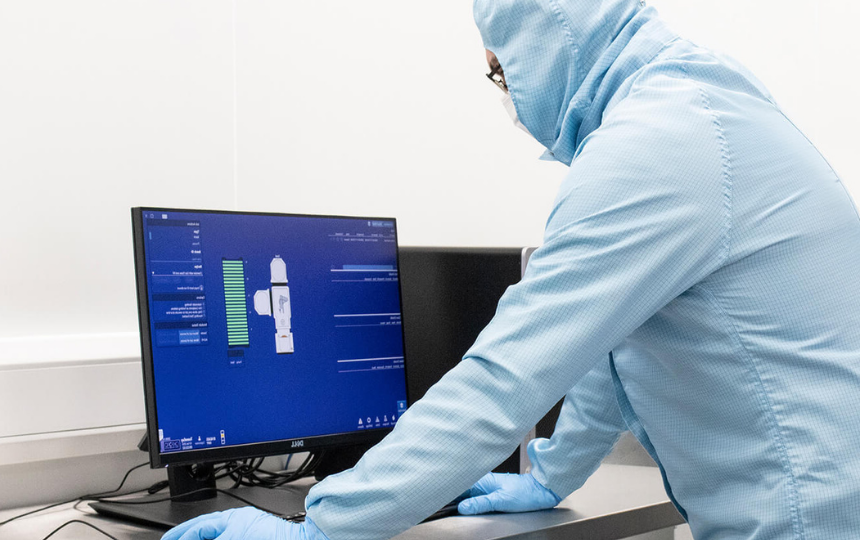
  • Exceptional level of responsive system control
  • Optimise system and process performance
  • Different levels of software to suit your requirements
  • Brand new intuitive layout and design
Find out more

Explore our comprehensive technical training courses

At Oxford Instruments Plasma Technology, we offer a wide range of technical training courses designed to suit all skill levels and needs.
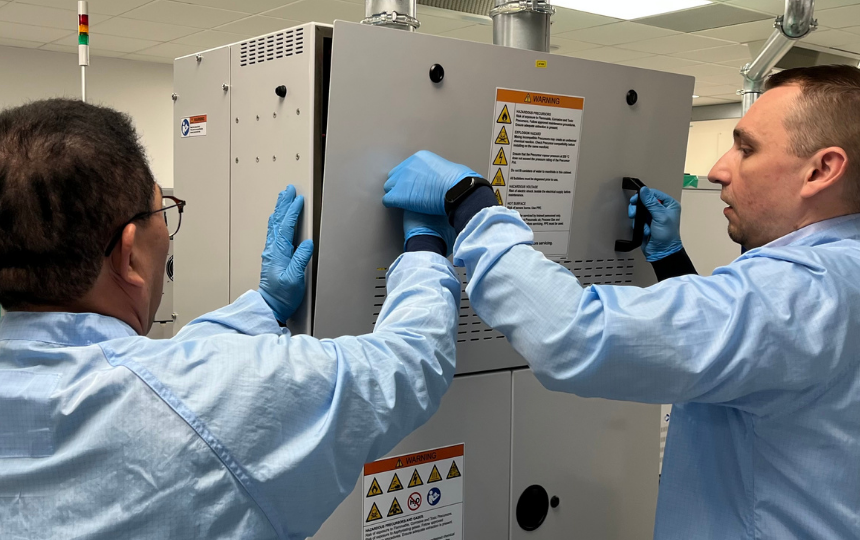

  • Level 1 (Introductory): New system users for all platforms
  • Level 2 (Intermediate): Equipment and maintenance training for all platforms
  • Level 3 (Advanced): for plasma, ion beam and ALD systems
  • Specialist technical modules: process and handler technical training for all platforms
Find out more

Latest news

Upcoming events