
Part of the Oxford Instruments Group
Expand

Reactive ion etching (RIE)

Delivers anisotropic dry etching for an extensive range of processes

Reactive ion etching - plasma enhanced (RIE-PE)

Combining two plasma generation techniques in one tool

PlasmaPro 100 RIE

Deliver isotropic and anisotropic dry etching for an extensive range of processes


Reactive ion etching (RIE)


Reactive Ion Etching (or RIE) is a simple operation and an economical solution for general plasma etching. A single RF plasma source determines both ion density and energy. Our RIE modules deliver anisotropic dry etching for an extensive range of processes.

Multiple choices of etch processes:
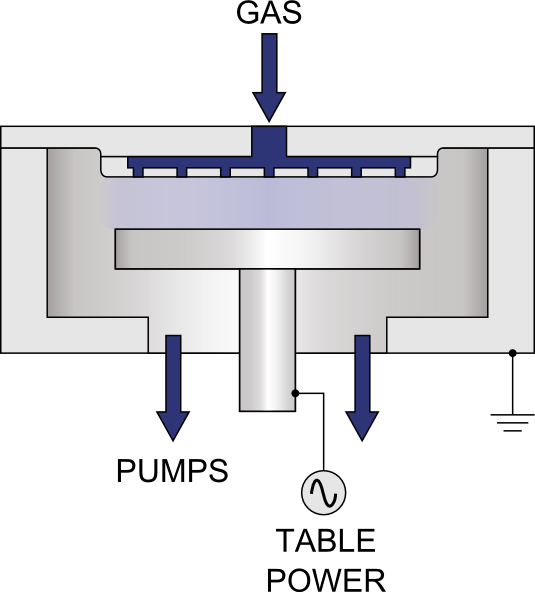
  • Chemical etching – isotropic, fast rate
  • Ion induced etching – anisotropic, medium rate
  • Physical etching – anisotropic, slow rate
  • Wide applications in semiconductor de-processing and failure analysis


Key features and benefits of RIE


RIE features:

  • Solid state RF generators and close coupled matching network for fast and consistent etching
  • Full area process gas inlet showerhead for uniform gas distribution
  • Electrodes for temperatures from -150ºC to +400ºC
  • High pumping capacity gives wide process pressure window
  • Wafer clamping with He backside cooling is available for optimum wafer temperature control

A wide range of materials can be etched, including:

  • Dielectric materials (SiO2, SiNx, etc.)
  • Silicon-based materials (Si, a-Si, poly-Si)
  • III-V materials (GaAs, InP, GaN, etc.)
  • Sputtered metals (Au, Pt, Ti, Ta, W, etc.)
  • Diamond-like carbon (DLC)


Reactive ion etching – plasma enhanced (RIE-PE)


Reactive Ion Etching Plasma Enhanced (RIE-PE) combines two simple plasma generation techniques on one tool.

With RIE, more directional etching and faster rates are achieved as the surface the sample sits on has an accelerating voltage attracting ions from the plasma. PE has no accelerating voltage and more isotropic etching takes place.
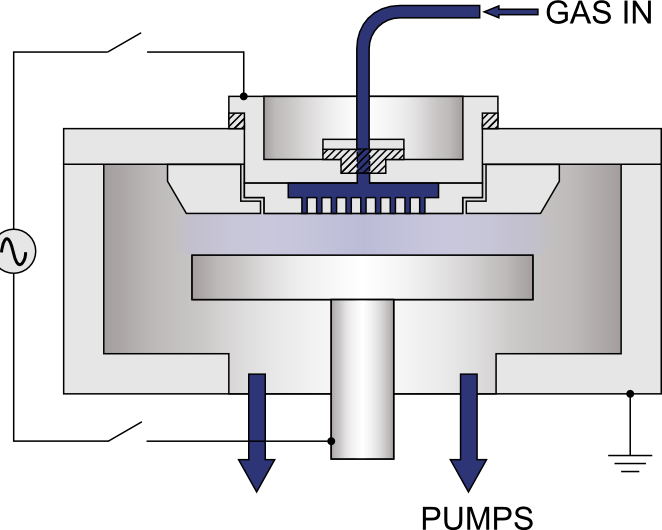
  • Substrate electrode cooled
  • Top or bottom electrode RF driven (13.56 MHz)
  • Automatic switching
  • Shower held gas inlet (in the top electrode)
  • Parameter: gas flows, pressure, RF power


Features and benefits of RIE-PE


Featured ICP RIE products


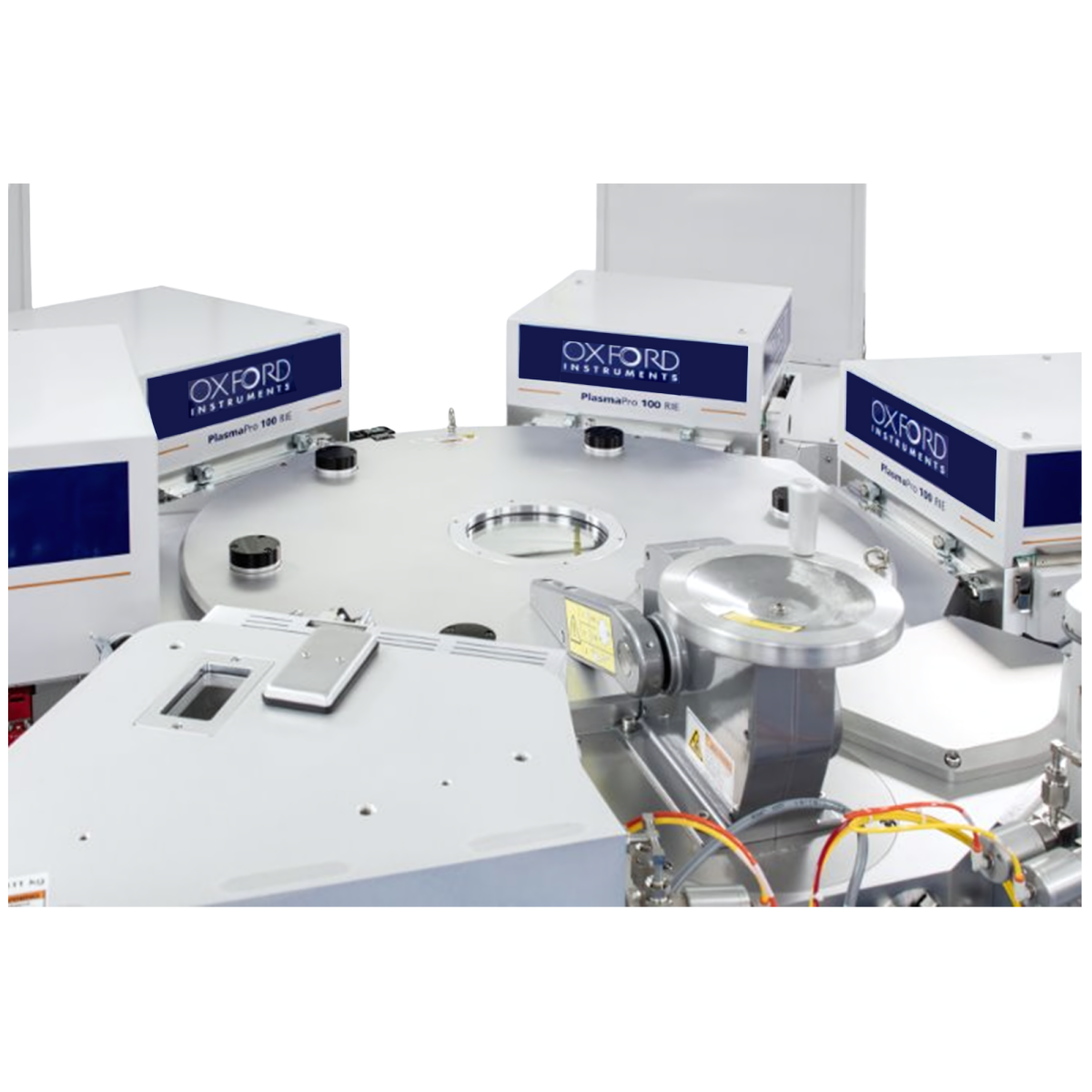
PlasmaPro 100 RIE


The PlasmaPro 100 RIE modules deliver isotropic and anisotropic dry etching for an extensive range of processes. It is suitable for research and production customers, providing a controlled environment that improves process repeatability with load-lock and cassette-to-cassette options.
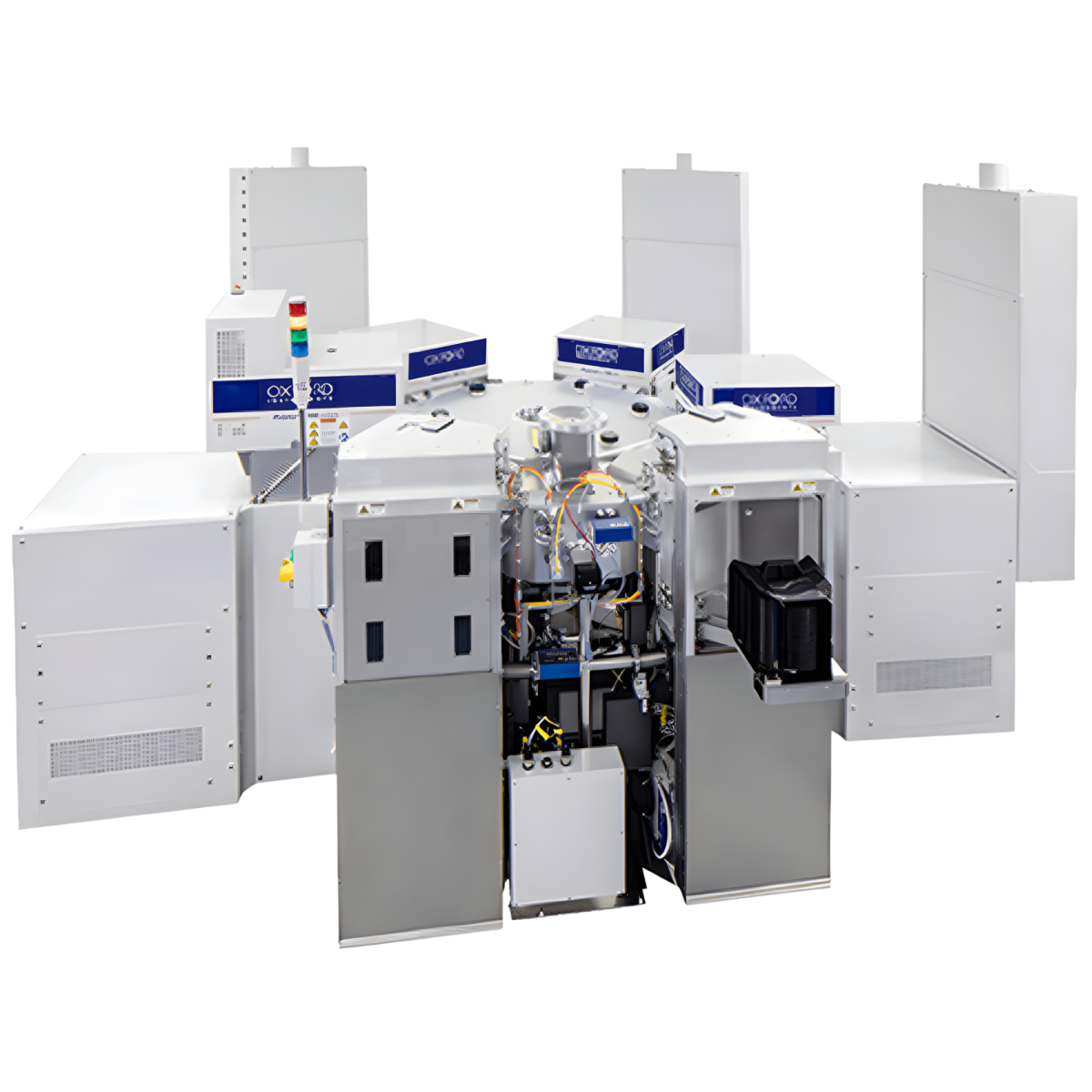
  • Compatible with all wafer sizes up to 200mm
  • Single-wafer or batch processing with excellent process control
  • High control of the gases and plasma power
  • Rapid change between wafer sizes
  • Low cost of ownership and ease of serviceability
  • Excellent uniformity, high throughput and high precision processes
  • In-situ chamber cleaning and end-pointing
  • Wide temperature range electrode, -150°C to 400°C


Overview of PlasmaPro 100 RIE


Reactive Ion Etch (RIE) is a predominantly physical etch process. A rich plasma is created just above the wafer and the ions are accelerated toward the surface to produce a powerful and highly anisotropic etch. Gas enters the top of the chamber where it is converted into a reactive plasma at low pressure by a wafer-level RF source. The ions either interact with the sample to form etch by-products, or remain as unreacted species. All the unreacted species and by-products are removed from the chamber by the vacuum pump to maintain a rich and active plasma to maintain high etch rates.

The PlasmaPro 100 RIE delivers reactive species to the substrate, with a uniform high conductance path through the chamber, allowing a high gas flow to be used while maintaining low pressure.

Features of PlasmaPro 100 RIE


  • Wide temperature range electrode (-150°C to +400°C) which can be cooled by liquid nitrogen, a fluid re-circulating chiller or resistively heated. An optional blow out and fluid exchange unit can automate the process of switching modes
  • Reactive species to the substrate with a uniform high conductance path through the chamber
  • A fluid controlled electrode fed by a re-circulating chiller unit, offering excellent substrate temperature control
  • High pumping capacity gives a wide process pressure window
  • Wafer clamping with He backside cooling for optimum wafer temperature control
  • Single or double cassettes available with a range of handler options
  • Option of a highly reliable vacuum transfer robot

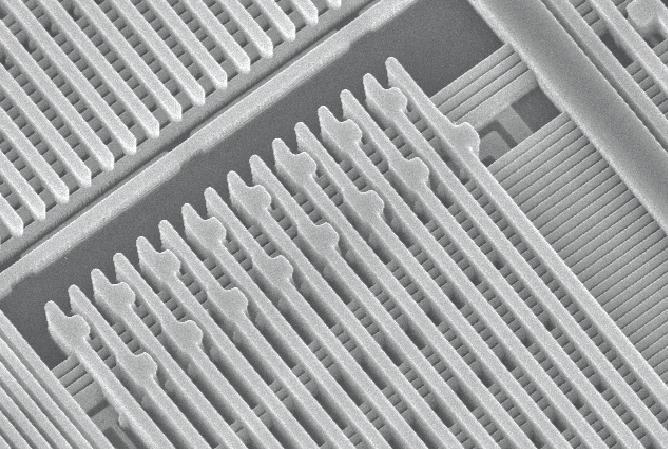
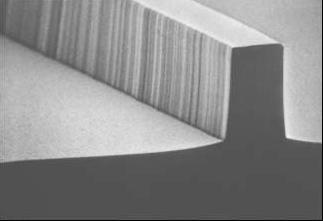
RIE of InP waveguide

Dielectric metal etch - Courtesy of Atmel
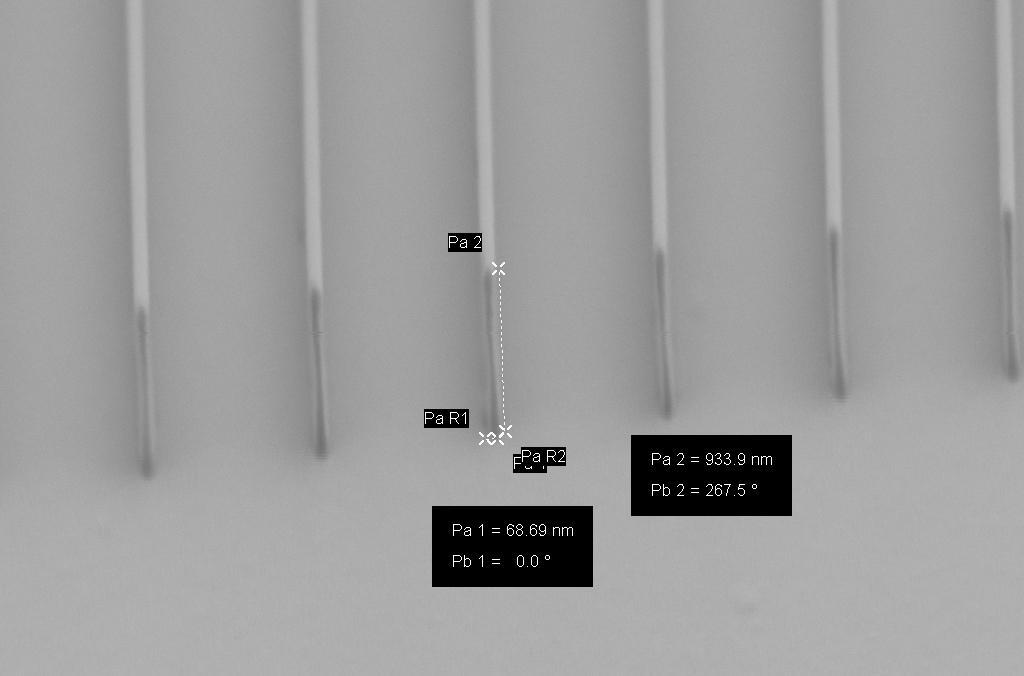
70nm Fused Silica lines 933nm deep Cr mask - Courtesy of Cornell Nanoscience facility


Applications for PlasmaPro 100 RIE


  • III-V etch processes
  • Solid State Lasers InP etch
  • VCSEL GaAs/AlGaAs etch
  • RF device low damage GaN etch
  • Diamond Like Carbon (DLC) deposition
  • SiO2 and quartz etch
  • Metals such as aluminium, chromium, titanium
  • Polymers and photoresists
  • Failure analysis dry etch de-processing ranging from packaged chip and die etch through to full 200mm wafer etch


Specifications of PlasmaPro 100 REI


Cluster load lock options

  • Clusterable with up to 4* process modules including ALD, ALE, ICP, CVD, PECVD, Ion Beam Etch and Ion Beam Deposition systems
  • Single wafer loading directly into central handling unit or via optional load station (required for through the wall integration)
  • Multiple chambers can be in operation simultaneously where processed wafers wait in chamber until load station is under vacuum and empty

*with MX600ss

Typical conditions

  • 5-500mTorr operating pressure
  • 0.1-1.5 W/cm2 power density
  • 5-200 sccm total gas flow
  • 30-800V DC bias generated on lower electrode
  • Substrate usually sits on a Quartz or graphite coverplate

Advanced load lock options

  • Arm position control: Stepper motor
  • Opening: Front held by gas struts with locking mechanism
  • Wafer tracking for wafers >100mm
  • Recommended for: Where positional accuracy is critical to application
  • Not recommended for: Transparent substrates

Global customer support

Oxford Instruments is committed to providing a comprehensive, flexible and reliable global customer support. We offer excellent quality service throughout the life of your system.
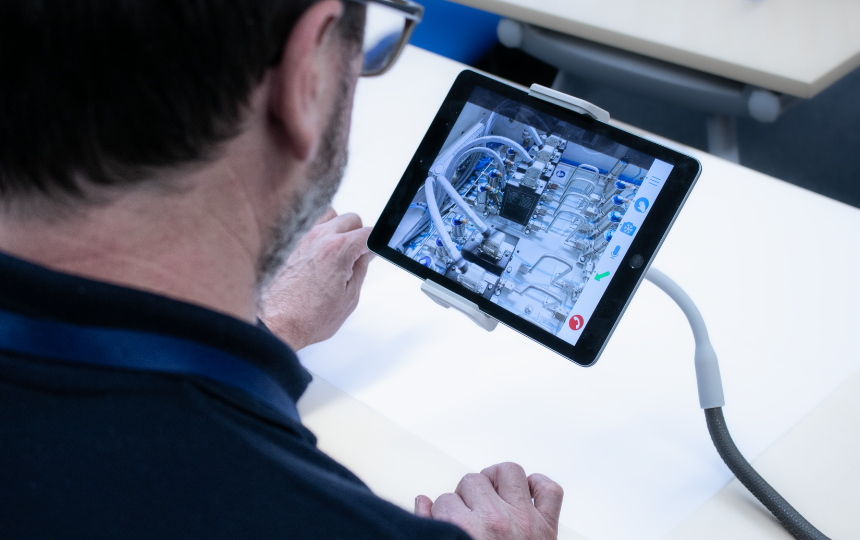
  • Remote diagnostics software provides quick and easy fault diagnosis and resolution.
  • Support contracts are available to suit the budget and situation.
  • Global spares in strategic locations for quick response.
Find out more

NEW: PTIQ software

PTIQ is the latest intelligent software solution for PlasmaPro and Ionfab processing equipment.
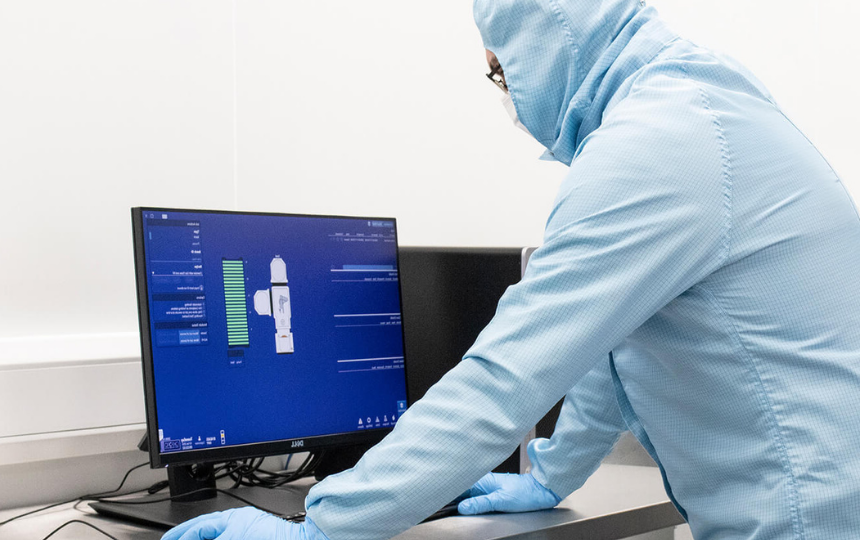
  • Exceptional level of responsive system control
  • Optimise system and process performance
  • Different levels of software to suit your requirements
  • Brand new intuitive layout and design
Find out more

Explore our comprehensive Training Training courses

At Oxford Instruments Plasma Technology, we offer a wide range of technical training courses designed to suit all skill levels and needs.

  • Level 1 (Introductory): New system users for all platforms
  • Level 2 (Intermediate): Equipment and maintenance training for all platforms
  • Level 3 (Advanced): for Plasma, Ion Beam and ALD systems
  • Specialist Technical Modules: process and handler technical training for all platforms
Find out more

Upgrades/Accessories

Gas pod - incorporate extra gas lines and allow greater flexibility

Logviewer software - datalogging software allows realtime graphing and post run analysis

Optical end point detectors - an important tool for achieving optimal process results

Soft pump - allows the slow pumping down of a vacuum chamber

Turbomolecular vacuum pump - offers superior pumping speeds and higher throughput

X20 Control System - delivers a future proof, flexible and reliable tool with increased system ‘intellect’

Advanced Energy Paramount generator - Offering increased reliability and greater plasma stability

Automatic pressure control - This controller ensures very fast and accurate pressure control

Dual CM gauge switching - provides the ability to utilise two differing ranges of capacitance manometer via a single pressure control valve

LN2 autochangeover unit - enables table cooling fluid to be automatically switched between Liquid Nitrogen (LN2) and Chiller Fluid

Wide temperature range electrode - significant design improvements to increase process performance

Latest news

Upcoming events